
 The Coffee Break Screenwriter: Writing Your Script Ten Minutes at a Time (2nd Edition)
 Subtotal : $21.71
Sale
$14.96
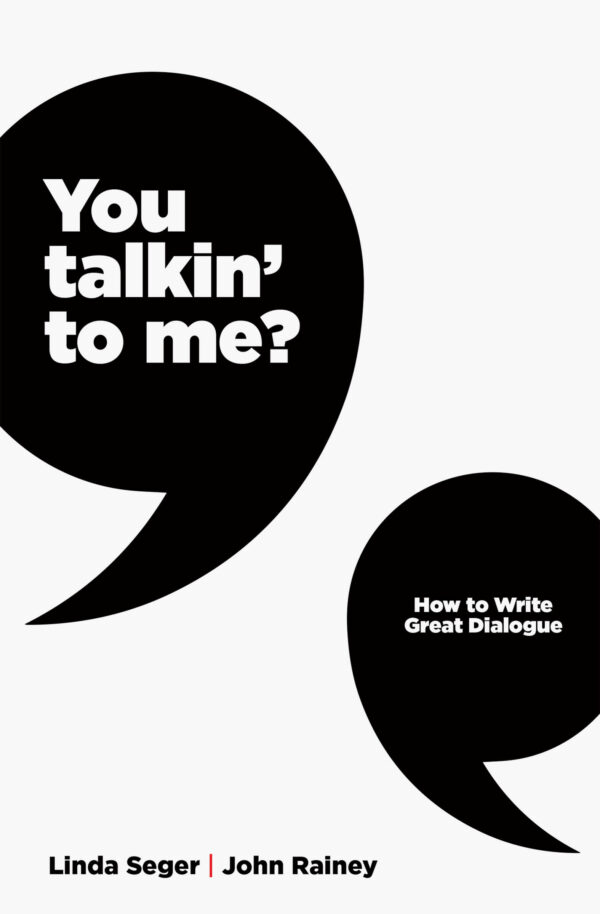
You Talkin’ to Me?: How to Write Great Dialogue
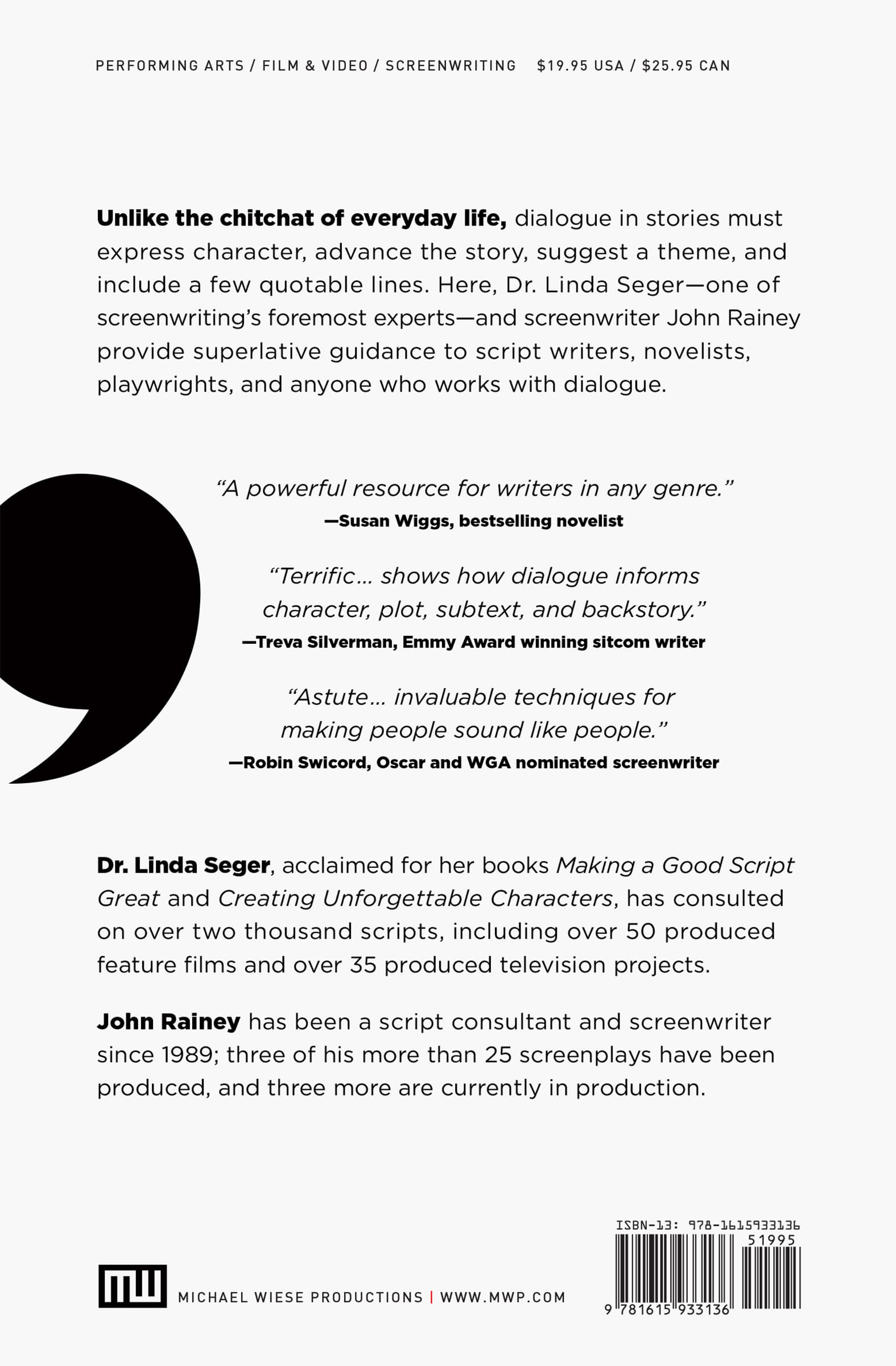
Unlike the chitchat of everyday life, dialogue in stories must express character, advance the story, suggest a theme, and include a few memorable lines that audiences will be quoting for decades to come.
The best stories have dialogue that sparkles, but it’s easy for inexperienced writers to fall into common pitfalls like creating dialogue that’s wooden or too on the nose. Other writers end up with exposition awkwardly inserted into conversations, actors tripping over unnatural phrases, or characters who all speak exactly the same way.
In You Talkin’ to Me?, Linda Seger and John Winston Rainey are here to help with all your dialogue problems. In each chapter, they explore dialogue from a different angle and discuss examples of great dialogue from films and novels. To cap it all off, each chapter ends with examples of poor dialogue, which are annotated by Linda and then rewritten by John, so readers don’t just learn how to recognize when it’s done well―they also learn how to make dialogue better.
Whether you’re writing fiction or nonfiction, for the screen or for the page, this book will get your characters talking.
| audio_file | https://mwpmails.s3.amazonaws.com/audio_samples/you_talkin_to_me_sample.mp3 |
|---|---|
| sample_file | https://mwpmails.s3.amazonaws.com/pdf_samples/456749005-You-Talkin-to-Me.pdf |


Reviews
There are no reviews yet.